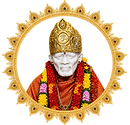
The Hidden Origins of Shirdi Sai Baba: A Journey of Faith and Unity
Updated: Feb 24
The Enigmatic Beginnings
The historic details of Shirdi Sai Baba’s birth remain one of the great spiritual mysteries of our time. While his authorized biography, the Sri Sai Satcharitra, maintains that his origins were kept secret, further insights have been offered through the writings of Sri Kaleshwar.

According to these accounts, Baba’s parents were simple villagers. His father was a boatman, and his mother was a devoted housewife. She was an ardent devotee of Lord Shiva, praying ceaselessly for the blessing of a child. Despite remaining childless for many years, her faith never wavered.
The Divine Encounter
One day, as her husband ferried passengers across the river, a violent storm erupted. Watching from the shore, the wife feared for his life. In that moment of desperation, Lord Shiva appeared before her and asked, "What do you want?" She replied, "You have come into my life; be born as my son." Shiva granted her a divine fruit to eat.
Miraculously, the storm cleared, and her husband returned safely. When she recounted her vision and showed him Shiva’s fingerprints on the fruit, her husband was overcome with jealousy. This jealousy only grew when she conceived. Determined to have his own direct experience of the Divine, he abandoned his home for the forest. Unwilling to be separated from him, his wife left their newborn child in the hut and followed her husband into the woods. As Swami Kaleshwar described, they lived out their days "receiving enlightenment from Shiva."
Unity of Faith
The abandoned child was found and adopted by a Muslim couple. The boy was unlike any other. In one account, while playing with the son of a Hindu priest, the priest’s son brought a Shiva Lingam. Upon seeing it, the young Baba immediately swallowed it. This act caused an uproar in the village; the Muslims viewed it as blasphemy, while the Hindus were distraught over the loss of their sacred symbol.
Tensions calmed only when the parents reminded the mob that the boy’s origins were unknown—he was neither strictly Hindu nor Muslim. This ambiguity became the hallmark of his life. He was eventually taken by a Fakir to the saint Venkusha, who became his Master.
In later years, Baba would freely quote from the sacred scriptures of both Islam and Hinduism. When asked about his religion, he would reply, "The ways to God are many, but God is one. Serve God. Love each other. This is God’s way." His life was a living message to the world about the unity of all religions.
The Guru and the Brick
Baba stayed with his Master, Venkusha, for 12 years. Because Baba received more love and attention than the other disciples, jealousy brewed within the ashram. In one instance, the disciples attempted to kill him by hurling a brick at his head. As the brick flew through the air, Baba called out his Master’s name. Miraculously, the brick stopped in mid-air.
This brick was later given to Baba by Venkusha. It became his "power object," which he used as a pillow and kept by his side until the very last days of his life.
Baba’s Promise
Sai Baba lived an outwardly simple life in Shirdi, spending his days in the dilapidated mosque known as Dwarkamai and begging for alms. Yet, hundreds of miracles were chronicled during his lifetime, and thousands more have been reported since he left his body in October 1918.
Across the globe, stories abound of disasters averted and healings granted by an "old man with a scarf on his head." Often, those he helped had never heard of him, only recognizing him later in photographs. Baba’s promise remains eternal: "If you look to me, I look to you. If you cast your burden on me, I shall bear it. Even after I leave my body, I shall come to the aid of my devotees."
The Dawn of the Sai Yuga
In the last century, spiritual communities have spoken of a coming "New Age." In 1998, Swami Kaleshwar identified this not as the dark Kali Yuga, but as the Sai Yuga.
"Sai means Father and Mother," Swami taught. "In the Sai Yuga, everyone will come to love Shirdi Sai Baba. The rules of this age have changed. It is no longer necessary to go through the hardships of the past. There are unbelievable shortcuts now."
In this new era, the connection to the Divine is as simple as a thought. "Just thinking, 'Oh Baba, I love you,' is enough," Swami said. "It is like making a phone call. You say, 'I love you,' and He says, 'Love you too.'"
The Path of the Future
The defining characteristic of the Sai Yuga is Service. Baba’s nature was to love all and serve all, seeing the good in every human being. While enlightenment is more accessible in this age, it requires us to master our negative emotions.
As Swami Kaleshwar emphasized, the keys are Shraddha (Faith) and Saburi (Determination). Baba promised, "Take one step towards me and I will take 99 steps towards you." But you have to surrender. Just open your heart and receive.
The goal of this age is to move beyond the labels of religion. As Swami stated, "Jesus never spoke about Christianity. Mohammed never spoke of Islam. God has only one organization, and that is Love. I am doing my best to bring Baba to the world—not as a religion, but as the essence of the religion of love."
Embracing the Journey Together
As we reflect on the life of Shirdi Sai Baba, we are reminded of the profound lessons he imparted. His journey from a mysterious birth to a revered spiritual figure teaches us about the power of faith, love, and unity.
In our own lives, we can embody these teachings by fostering a sense of community, engaging in acts of service, and nurturing our spiritual connections. The essence of Baba's message encourages us to look beyond our differences and embrace the shared humanity that binds us all.
Let us walk this path together, guided by the light of Shirdi Sai Baba. In doing so, we not only honor his legacy but also create a vibrant community space for Satsang, meditation, and spiritual healing.
In this sacred journey, may we always remember that we are never alone. The spirit of Shirdi Sai Baba walks with us, guiding us towards peace, love, and understanding.


Comments